
How to make Tapa Prints
Podcast: Play in new window | Download
Subscribe: Apple Podcasts | RSS
How to make Tapa prints with a Fiji village.
This archived podcast page includes images and notes from the original tapa-printing story.
In part two of this Fiji village archive story, a visiting team brought books, pencils, stationery, skipping ropes, footballs, and learning supplies for a local school.
The visit was remembered as a joyful moment, with students receiving new learning materials and play equipment.
During the visit, one student was especially eager to try the guitar. The moment became part of the broader story of learning, music, and community connection.
How to make Tapa Prints
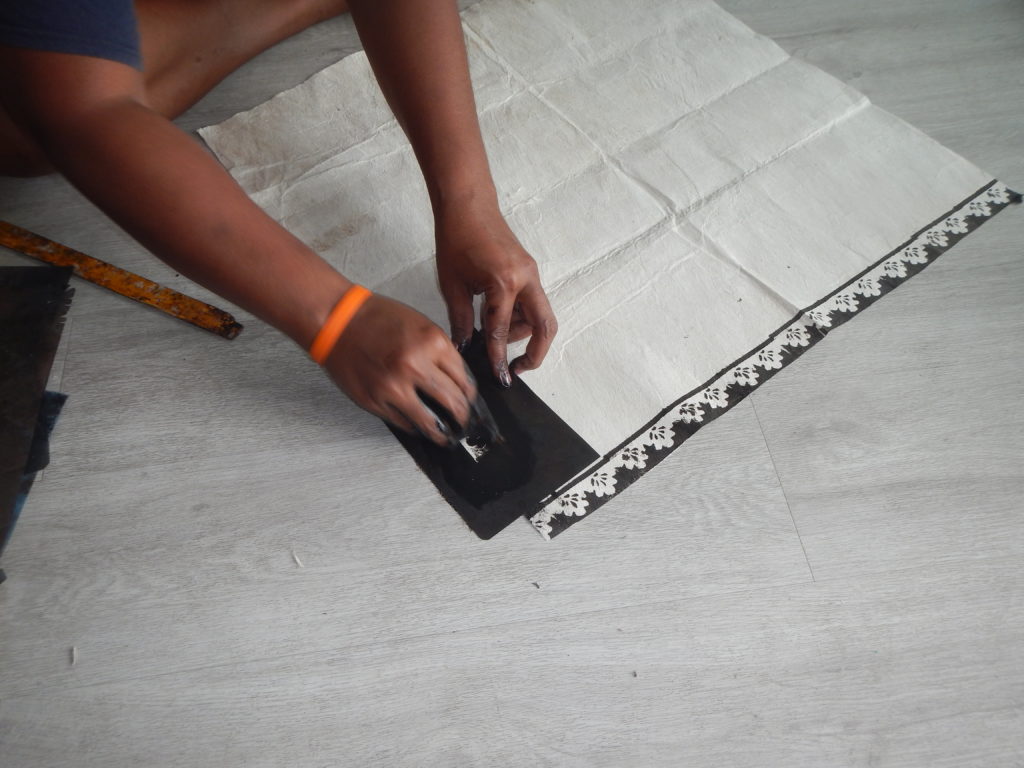
We were shown how traditional Fijian tapa designs are printed.
Tapa printing is handed down from generation to generation.
The prints tell stories of journeys, fishing, hunting, gathering food, village life, local designs, and vegetation.
The stencils are made from old hospital X-rays, which create a flexible waterproof printing surface. In this example, the border is printed first before working into the centre.
I had the privilege of learning a traditional tapa-printing style from a local artist.
Black and red are the two key colours used. The black pigment is made from ash, while the red pigment comes from boiled tree materials that create a natural glue-like colour.
During the visit, the artist arrived with handmade inks and tapa, and the lesson began.
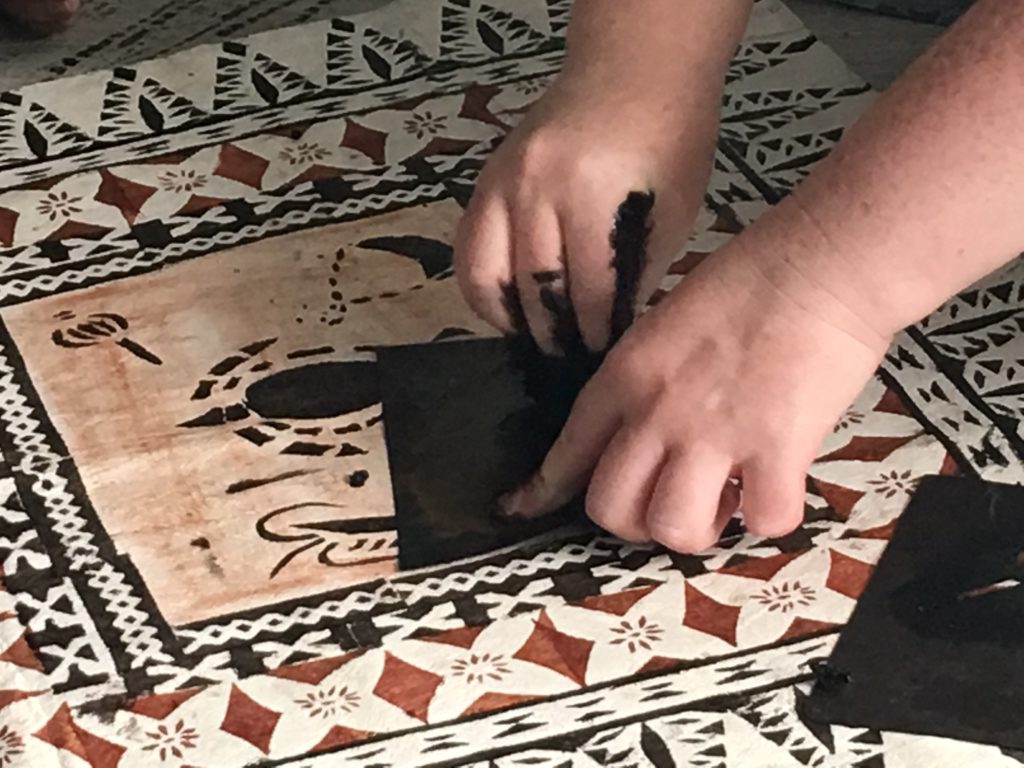
Tapa making using black ink
Tapa designs
This design is one of many tapa print styles. Water, boats, sea, land, flowers, and local fauna can all become part of the visual story.
Final stages of a finished tapa print
In the final stages of tapa printing, our hands were stained with charcoal ink as the designs came together, using local patterns inspired by the sea and the village.
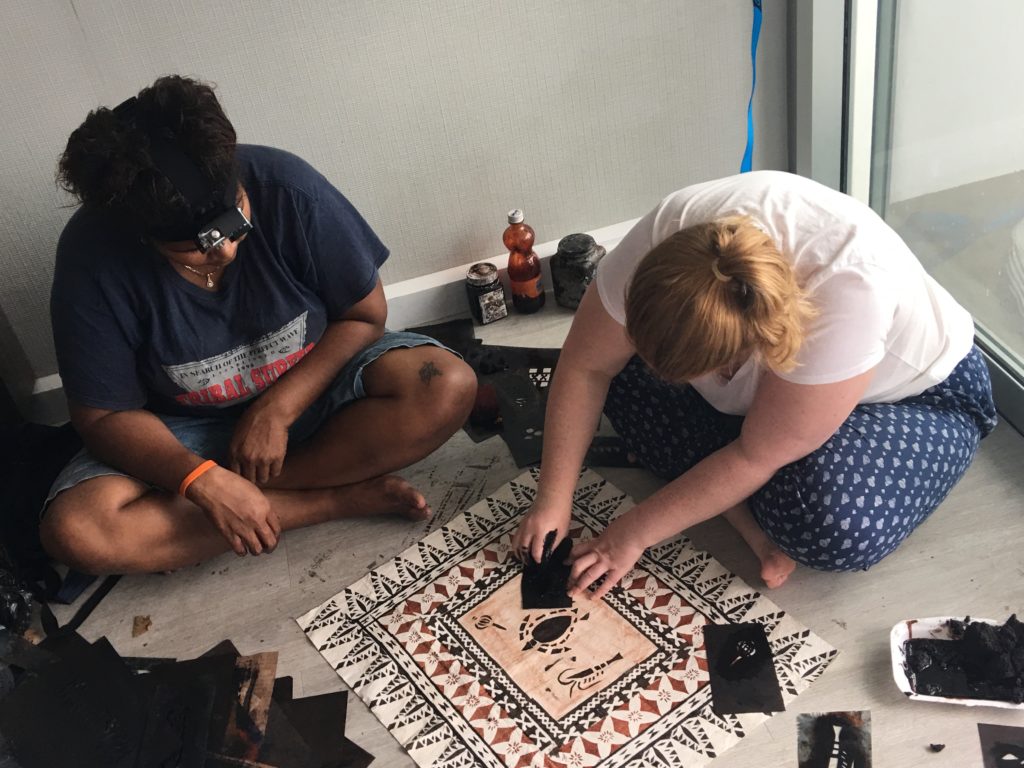
Turtles play an important role in storytelling
One design told the story of the turtle, an important figure in many local stories and designs, alongside village and sea-based themes.
Thanks to the local artist and family member who shared this tapa-printing lesson and helped visitors learn more about the designs, materials, and stories behind the work.
A sponge is covered with black ink and used to create the designs. Sea sponges can also soak up the ink and help form the printed patterns.